1. Product Overview
The GASSHIELD UGT-E4-NO2 is a high-performance fixed-potential electrolytic (electrochemical) nitrogen dioxide gas sensor designed for accurate and reliable detection of nitrogen dioxide (NO₂) in industrial and environmental applications. Utilizing a three-electrode electrochemical cell architecture, the sensor delivers a detection range of 0–100 ppm with 1 ppm resolution and a sensitivity of −300 ± 100 nA/ppm. With rapid T90 < 30 s response time, excellent repeatability (2% of output signal), and long-term stability of <2% signal per month, the UGT-E4-NO2 provides precise NO₂ monitoring for high-concentration, safety-critical environments.
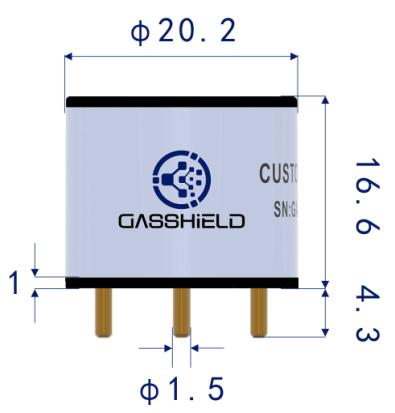
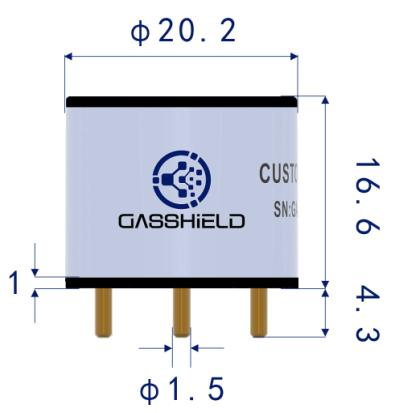
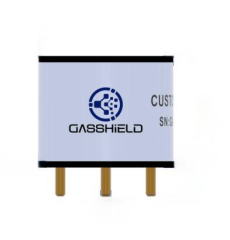
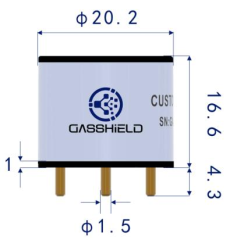
The sensor operates without bias voltage and supports a wide load resistance range of 5–30 Ω, simplifying circuit design integration. Housed in a compact Φ20.2 mm form factor, the UGT-E4-NO2 is ideal for integration into portable gas detectors, fixed gas alarm systems, industrial process monitoring equipment, fumigation facility detectors and safety instruments where high-range nitrogen dioxide detection is required.
2. Technical Principle
The UGT-E4-NO2 employs a fixed-potential electrolytic (electrochemical three-electrode) detection principle. The sensor cell consists of a working electrode, a counter electrode, and a reference electrode immersed in an electrolyte solution separated from the ambient atmosphere by a gas-permeable membrane.
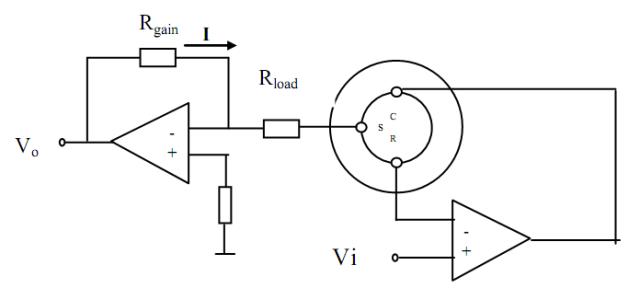
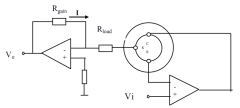
When nitrogen dioxide gas diffuses through the membrane and reaches the working electrode, it undergoes a reduction reaction, releasing electrons and generating a current. Simultaneously, a corresponding oxidation reaction occurs at the counter electrode. The magnitude of the current flowing between the working and counter electrodes is directly proportional to the nitrogen dioxide concentration in the surrounding atmosphere. This current is converted to a voltage signal via an external load resistor (5–30 Ω) or transimpedance amplifier circuit, enabling precise quantification of NO₂ concentration from 0 to 100 ppm.
The reference electrode maintains a stable potential at the working electrode, ensuring consistent sensitivity and minimizing drift over the sensor's 2-year service life. Zero bias voltage operation reduces power consumption and simplifies interfacing with microcontroller-based acquisition systems.
3. Key Features & Competitive Advantages
A. Wide High-Concentration Range
B. Rapid Response
C. Excellent Selectivity
D. High Accuracy & Long Service Life
E. Fast Recovery, Stable Baseline
-
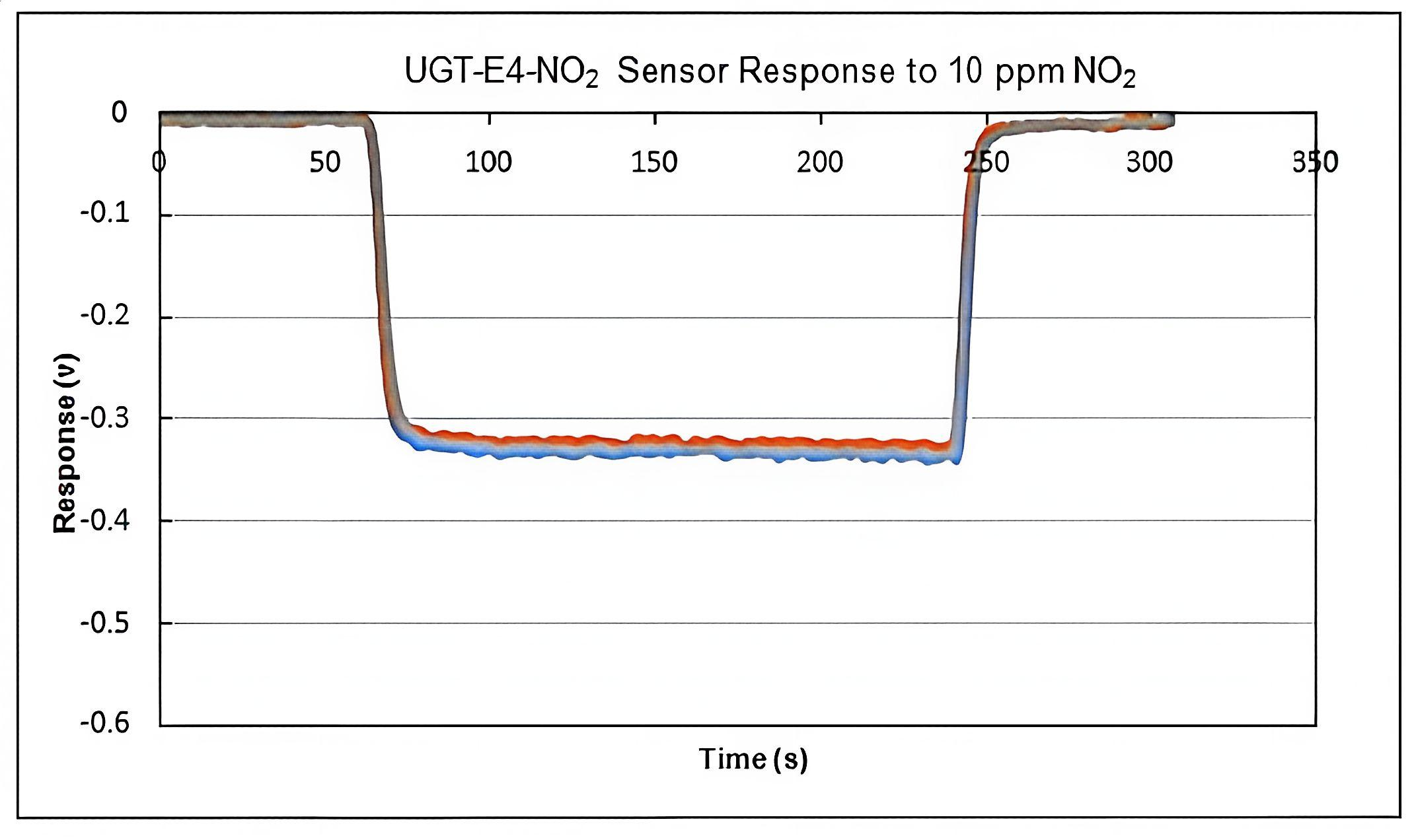
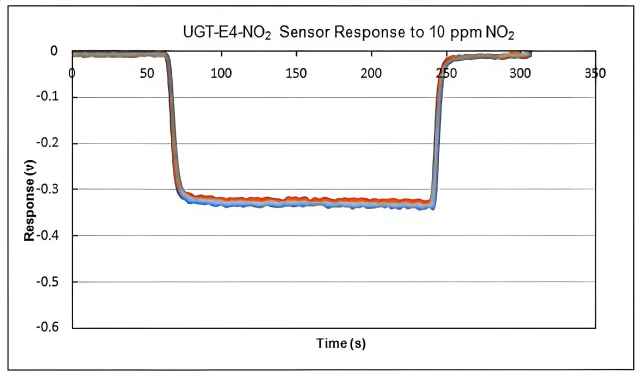
Quick return to zero after gas exposure, enabling continuous monitoring cycles.
-
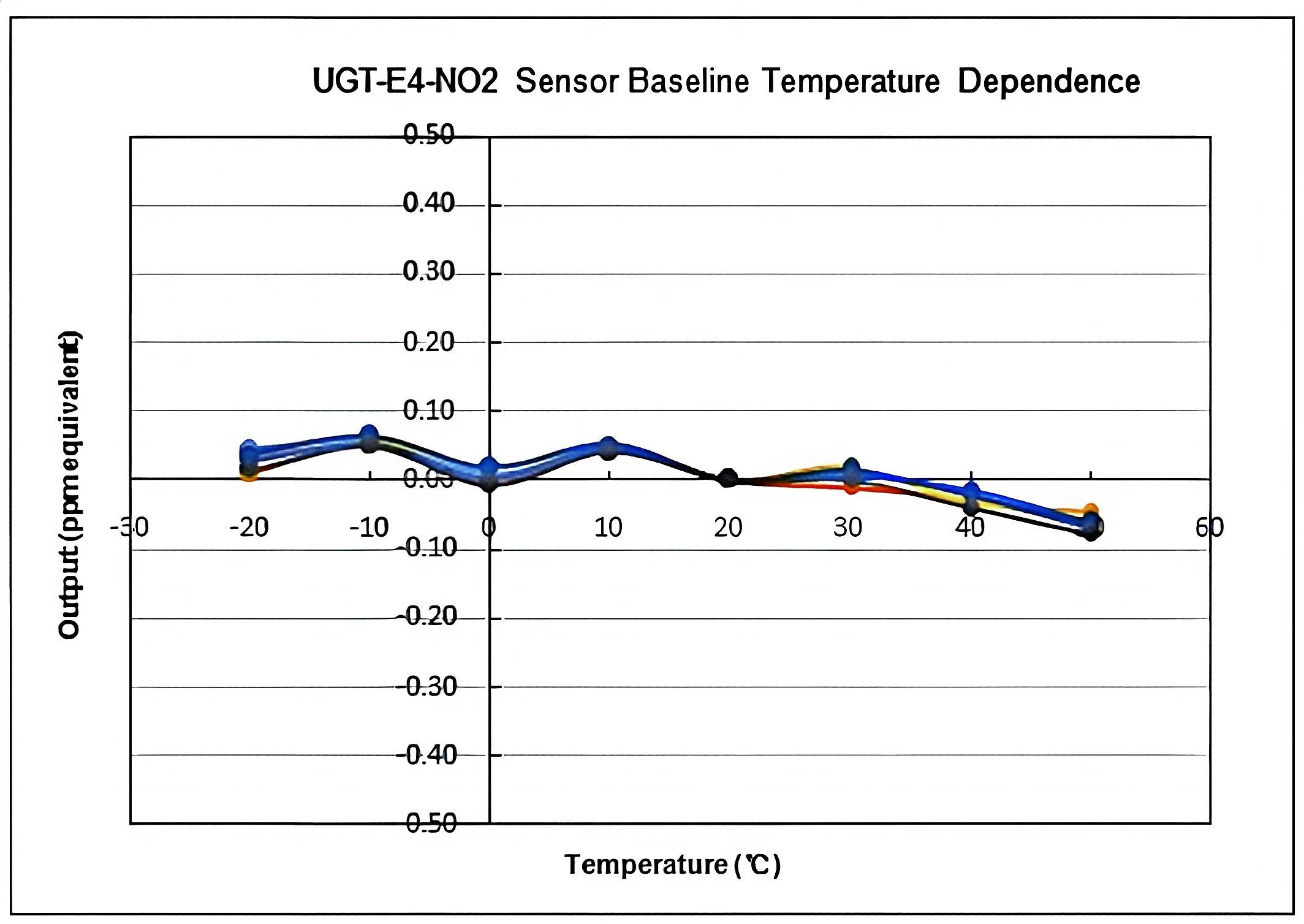
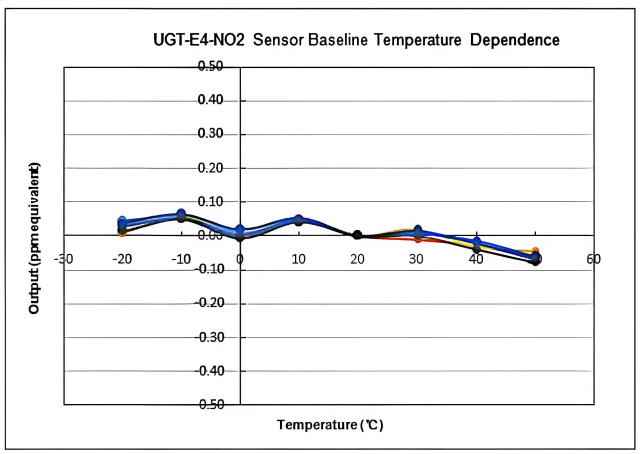
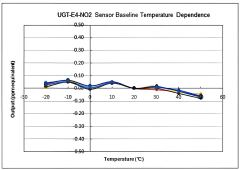
Baseline temperature drift within ±0.1 ppm equivalent across −20°C to +50°C — excellent zero stability.
F. Low Power Consumption
G. Excellent Repeatability & Stability
-
Repeatability within 2% of output signal for consistent measurement precision.
-
Long-term stability <2% signal per month, reducing frequent recalibration requirements.
H. Compact Size, Cost-Effective
4. Technical Specifications
Note: Cross-sensitivity may vary by ±30%. Calibration with target gas is recommended.
5. Applications
The GASSHIELD UGT-E4-NO2 is engineered for versatile deployment across high-concentration nitrogen dioxide detection and safety monitoring scenarios:
-
Nitrogen Dioxide Gas Detectors: Core sensing element for portable and fixed NO₂ detection instruments in high-concentration environments.
-
Industrial NO₂ Detection: Leak detection in nitric acid plants, chemical synthesis, metal etching and industrial processes.
-
Fumigation Facilities: NO₂ monitoring in sterilization and fumigation operations.
-
Industrial Safety: Fixed and portable gas detection systems for worker protection in NO₂ handling areas.
-
Gas Leak Detection: Early warning systems for nitrogen dioxide storage tanks, pipelines and distribution equipment.
-
Process Monitoring: NO₂ concentration measurement in chemical production and process control.
-
Biomedical: Nitrogen dioxide detection in biomedical research and laboratory applications.
-
Smart Municipal: Municipal industrial safety monitoring for smart city projects.
6. OEM Integration & Design Guidelines
To maximize design flexibility and ensure optimal sensor performance, the UGT-E4-NO2 is supported by comprehensive integration resources and handling guidelines for equipment manufacturers.
-
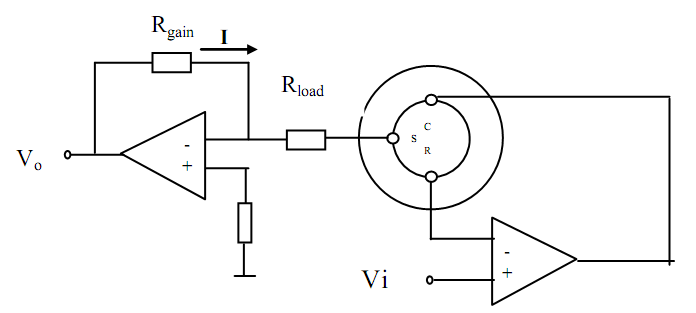
Basic Circuit Reference: Standard transimpedance amplifier circuit with R_gain and R_load provided for immediate PCB design integration. Compatible with 5–30 Ω load resistor configurations and zero-bias operation.
-
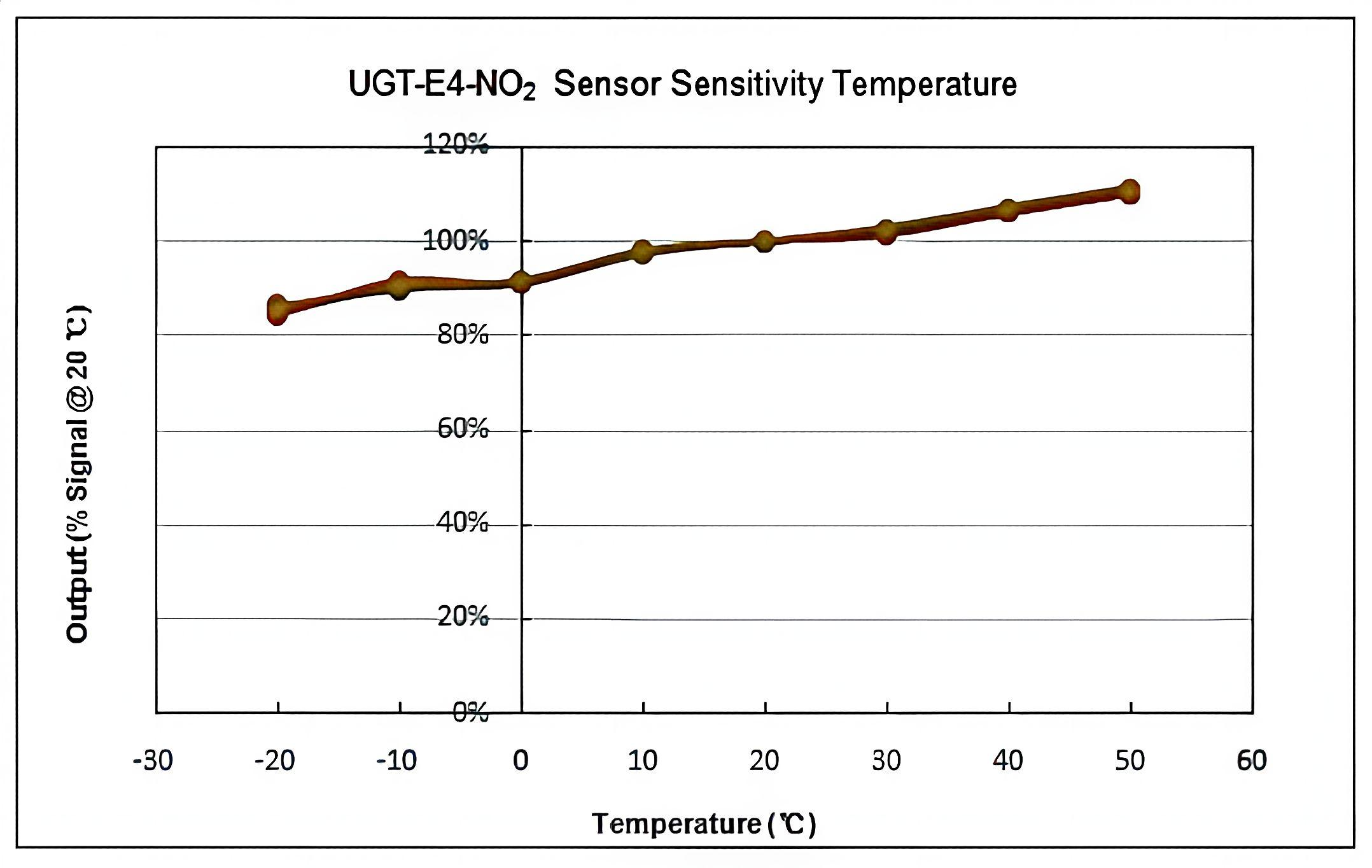
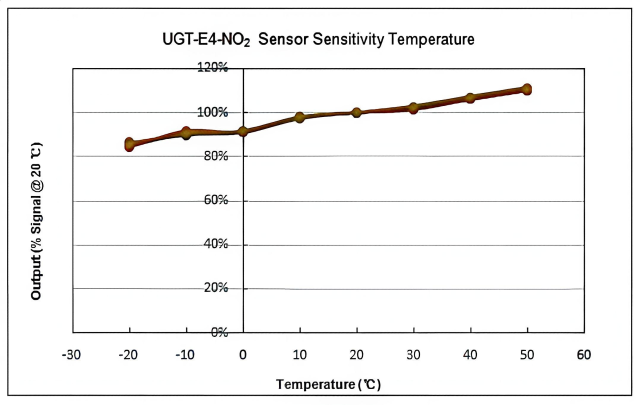
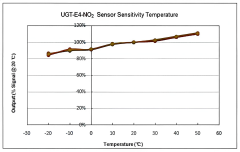
Temperature Compensation: Baseline output remains within approximately ±0.1 ppm equivalent across −20°C to +50°C — excellent zero stability. Sensitivity varies from approximately 85% to 112% of the 20°C value across the same range, among the most temperature-stable profiles in the E4 series. Minimal firmware compensation is required.
-
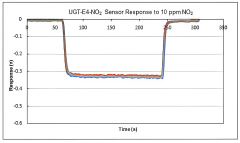
Response & Recovery Characterization: Verified response and recovery test data (10 ppm NO₂) enables alarm threshold optimization and adaptive filtering in host firmware.
-
Handling Precautions:
-
Sensor pins must be connected via a PCB socket; soldering or pin bending will damage the sensor.
-
During storage, the working electrode and reference electrode should be kept short-circuited.
-
Avoid contact with organic solvents, alcohol, paints, oils, silicone adhesives, and high-concentration gases.
-
Calibrate and test with standard gas using air as the background gas; oxygen participation is required for the electrochemical reaction.
-
Avoid prolonged use in corrosive gas environments.
-
Non-standard testing methods (concentrated ammonia water, cigarette smoke, lighter gas, exhaled breath, alcohol vapors) will expose the sensor to damaging concentrations — always use target gas with air as the background.
-
Calibration Recommendation: Calibration with the target gas is recommended; cross-sensitivity may vary by ±30%. Calibration should be performed in clean atmosphere with stable, gentle gas flow to simulate a diffusion state.