1. Product Overview
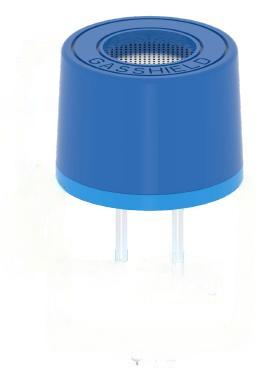
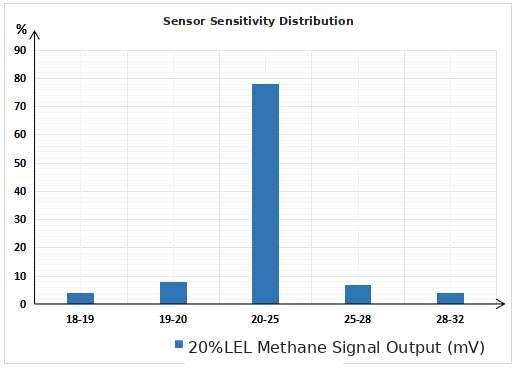
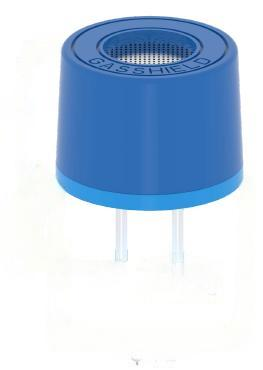
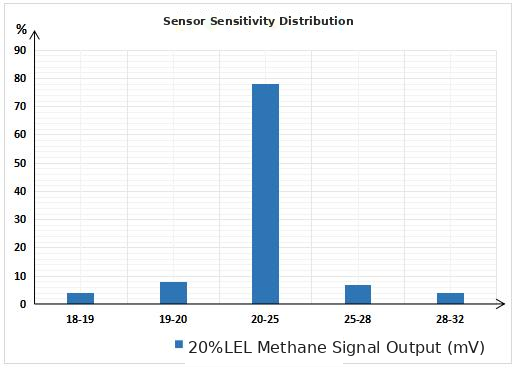
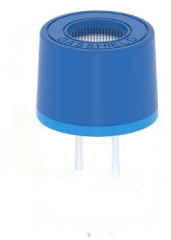
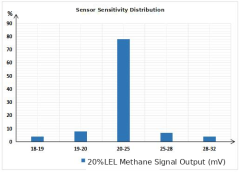
The GASSHIELD UGT-C5G is a high-performance catalytic combustion-type combustible gas sensor designed for accurate and reliable detection of Methane (CH₄), Propane (C₃H₈), Butane (C₄H₁₀) and most combustible gases and vapors. With a detection range of 0–100% LEL, output sensitivity of 18–32 mV at 20% LEL methane, and rapid T90 < 10 s response time, the UGT-C5G delivers fast, precise combustible gas detection for safety-critical applications.
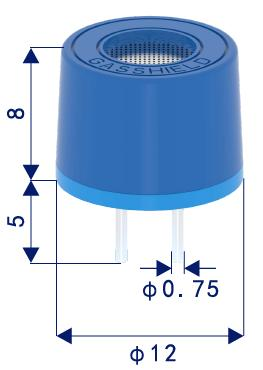
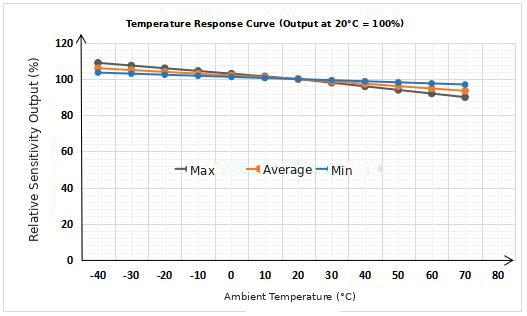
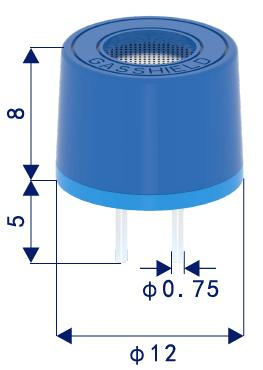
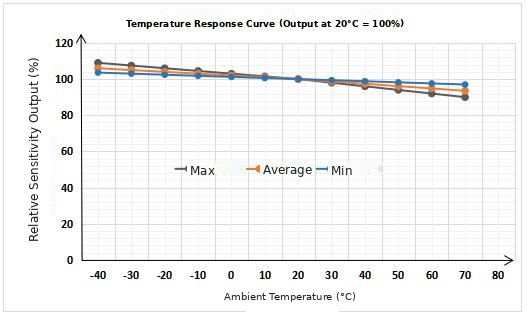
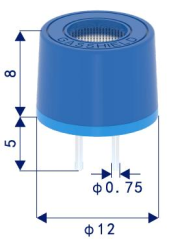
The sensor operates on the proven catalytic combustion principle with a Wheatstone bridge circuit, providing superior linearity (±3%), excellent repeatability and 5-year operating life in clean air. With strong vibration resistance, excellent poisoning resistance and stable output across −40°C to +70°C, the compact Φ12 mm UGT-C5G is ideal for integration into portable gas detectors, fixed gas alarm controllers, industrial safety systems and smart gas leak detection devices.
2. Technical Principle
The UGT-C5G employs a catalytic combustion (pellistor) detection principle. The sensor consists of a matched pair of elements — a catalytic (detection) element and a reference (compensation) element — arranged in a Wheatstone bridge circuit.
When combustible gas diffuses into the sensor and contacts the catalytic element, it oxidizes on the heated catalyst surface, causing a rise in element temperature and resistance. The reference element, coated with inert material, remains unaffected by the gas, compensating for ambient temperature and humidity variations. The resulting resistance imbalance in the bridge generates a voltage output proportional to the gas concentration, delivering a linear response from 0 to 100% LEL.
The sensor exhibits excellent directional stability: when rotated 360° in the vertical direction, the output signal change is limited to ±0.5% LEL, ensuring consistent readings regardless of installation orientation.
3. Key Features & Competitive Advantages
A. Multi-Gas Detection Capability
-
Responds to Methane, Propane, Butane, Hydrogen, Ethanol and a wide range of combustible gases and vapors — 28 gases characterized in the relative sensitivity table.
-
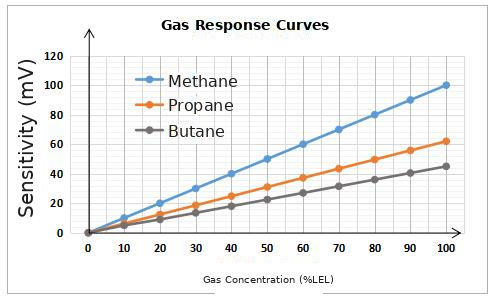
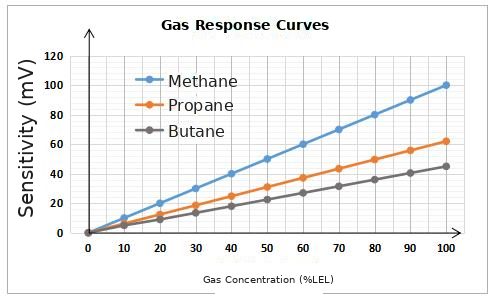
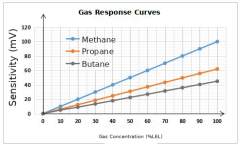
Near-linear output across the full 0–100% LEL range — see performance curves in Section 5.
B. Fast Response & Recovery
-
T90 < 10 s at 50% LEL methane for rapid leak detection.
-
Recovery time of only 15 s, enabling continuous monitoring cycles.
C. Good Long-Term Working Stability
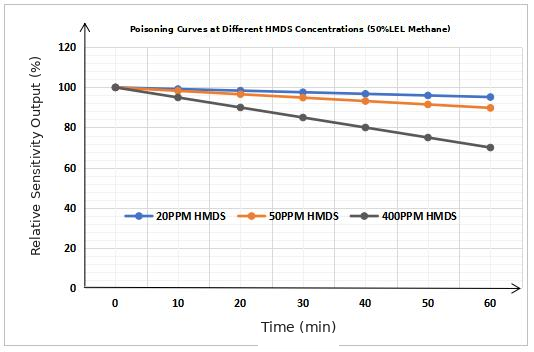
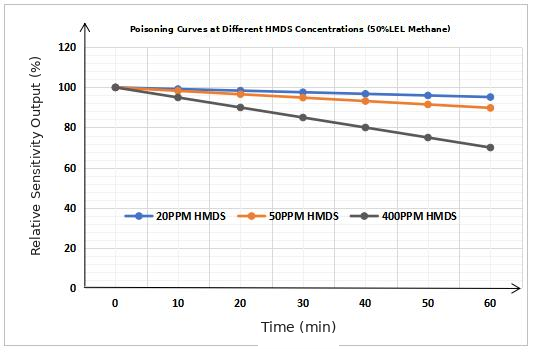
D. Excellent Poisoning Resistance
E. Strong Vibration Resistance
F. Excellent Repeatability
G. Wide Operating Environment
-
Operating temperature: −40°C to +70°C.
-
Continuous humidity: 15–90% RH (non-condensing); intermittent: 0–99% RH.
-
Low power consumption: <500 mW.
H. Compact Size, Cost-Effective
4. Technical Specifications
Relative Sensitivity to Common Gases (%): Methane 100 | Ammonia 98 | Hydrogen 80 | Methanol 70 | Ethane 70 | Ethylene 70 | Carbon Monoxide 65 | Propane 60 | Dimethyl ether 60 | Acetone 55 | Ethanol 50 | Butane 50 | Isobutane 50 | Isobutylene 50 | Butanone 50 | Acrylonitrile 48 | Hexane 45 | Ether/Diethyl ether 45 | Heptane 43 | n-Octane (Gasoline) 43 | Cyclohexane 42 | Toluene 42 | Pentane 42 | Benzene 40 | Isopropanol/Isobutanol 40 | Ethyl acetate 39 | Acetic acid 37 | n-Pentane 35 | Xylene 30 | Chloroform 30
Note: Relative sensitivity values may vary with production batch and test environment. Calibrate with the target gas before use. Example: calibrating a hydrogen detector with 50% LEL methane standard gas yields a reading of 50 × (100÷80) ≈ 62.5% LEL.
5. Applications
The GASSHIELD UGT-C5G is engineered for versatile deployment across combustible gas detection and safety monitoring scenarios:
-
Instrumentation: Core sensing element for combustible gas analyzers, detectors and alarm controllers.
-
Industrial Safety: Fixed and portable gas detection systems for oil & gas, petrochemical and chemical processing facilities.
-
Gas Leak Detection: Early warning systems for natural gas (methane) and LPG (propane/butane) leaks in pipelines, storage tanks and distribution equipment.
-
Smart Home & Municipal: Residential and commercial natural gas/LPG leak alarms for smart home and smart city projects.
-
Commercial & Catering: Kitchen gas leak detection in restaurants, hotels and canteens.
-
Wastewater & Environmental: Methane monitoring in sewage treatment plants, landfills and biogas facilities.
-
Mining & Tunnels: Combustible gas monitoring in coal mines, underground tunnels and confined spaces.
6. OEM Integration & Design Guidelines
To maximize design flexibility and ensure optimal sensor performance, the UGT-C5G is supported by comprehensive integration resources and handling guidelines for equipment manufacturers.
-
Basic Circuit Reference: Standard Wheatstone bridge circuit (Vin+/Vin− power input, Vout+/Vout− differential output) with recommended reference detection circuit provided for immediate PCB design integration. Operating voltage: DC 2.5 ± 0.1 V.
-
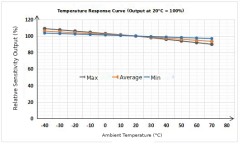
Temperature Compensation: See Section 5.2 for the temperature response curve (−40°C to +70°C, zero-compensated) to guide firmware compensation algorithms.
-
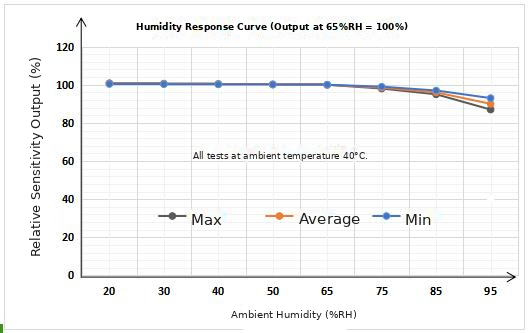
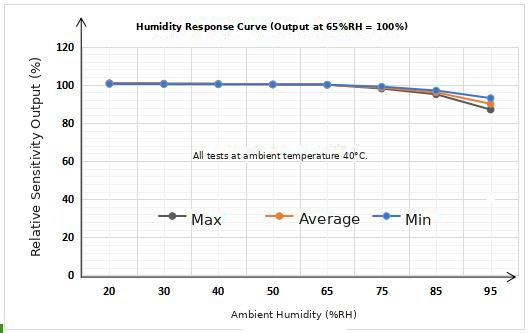
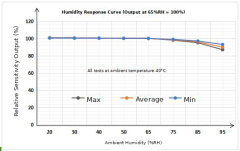
Humidity Compensation: See Section 5.3 for humidity response data (20–95% RH) for environmental robustness design.
-
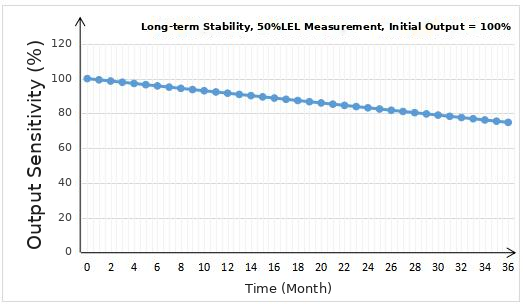
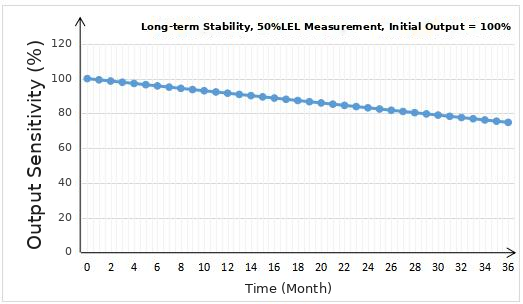
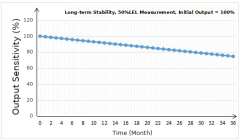
Response & Recovery Characterization: See Sections 5.1 and 5.6 for gas response and long-term drift data to optimize alarm thresholds and calibration intervals.
-
Gas-Specific Calibration: Use the Relative Sensitivity Table (Section 4) to convert readings between calibration gas and target gas: Detector reading = calibration gas concentration × (calibration gas coefficient ÷ target gas coefficient). Calibrate with the target gas before use; cross-sensitive gas calibration cannot guarantee measurement accuracy.
-
Handling Precautions:
-
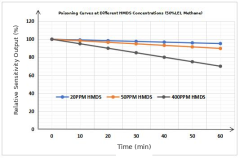
Avoid prolonged exposure to silicones, HMDS, lead compounds, sulfur compounds and other catalyst poisons.
-
Avoid contact with organic solvents, alcohol, paints and oils.
-
Do not exceed rated operating voltage/current to prevent catalyst damage.
-
Calibrate with standard gas (e.g., 50% LEL methane) in clean air background with stable, gentle gas flow.